
ORGANIC vs REGEN?
Can’t We All Get Along? Apparently Not.
Is it Even a Contest?
On our farm ORGANIC is the GOAT
We create systems that automatically feed customers into local food communities owned by market garden farmers.
Even though ORGANIC has a smaller footprint compared to cheap food’s chemical death grip on society, ORGANIC is still the DOG wagging the regenerative tail.
Sure, ORGANIC can be expensive, but we buy a lot of expensive stuff we can’t afford–like $8 coffee in a one-use cup – 5X a week.
There are literally hundreds of thousands of certified farmers growing organic, and even more who are not certified, plus millions of retailers selling it globally.
Americans, one of the UN-healthiest and wealthiest societies in the western world have a very poor per-capita adoption rate for organic food, which I suppose isn’t surprising. Canada on the other hand, a country that is rated happier than, and outlives Americans by THREE YEARS, embraces all styles of alternative agriculture that includes organics, permaculture and regenerative, et al. But even Canada can’t seem to get over the Adoption Curve hump into mainstream acceptance. We’re better than Americans in many areas, but we still have a long way to go.
Granted too, we know there are now advanced options today beyond old school organic, but organic is still the most visible and easily available option. Unfortunately, organic holds such a small segment of the American food market, just over 4%, that during times of civic unrest (today), almost any type of Alt-AG process could push organics aside to control the alternative food market.

Life is hard enough without having to second-guess food quality.
Is Cost the Culprit? Not Directly.
The USDA and investors report that organic is a tiny slice of the pie, which means conventional chemical farms produce most of the CHEAP unhealthy food on grocer’s shelves.
In an era of social media communication where everyone is now an armchair narrowcaster with a BIG VOICE, organic is still not purchased in great enough volume to lower the price point.
So where exactly, is the disconnect?
Don’t we all want to live healthier and longer?
Considering organic’s ongoing struggle to engage the mainstream, is it because there is a better and an affordable process waiting to move into organic’s coveted spot in the pantry?
Defeated organic supporters have expressed, “Why should we bother if organic is soon going to be history?” There is also the flip side who naively think organics is so well-entrenched it could never be knocked off its roost–famous last words. We also never thought cars would drive themselves.
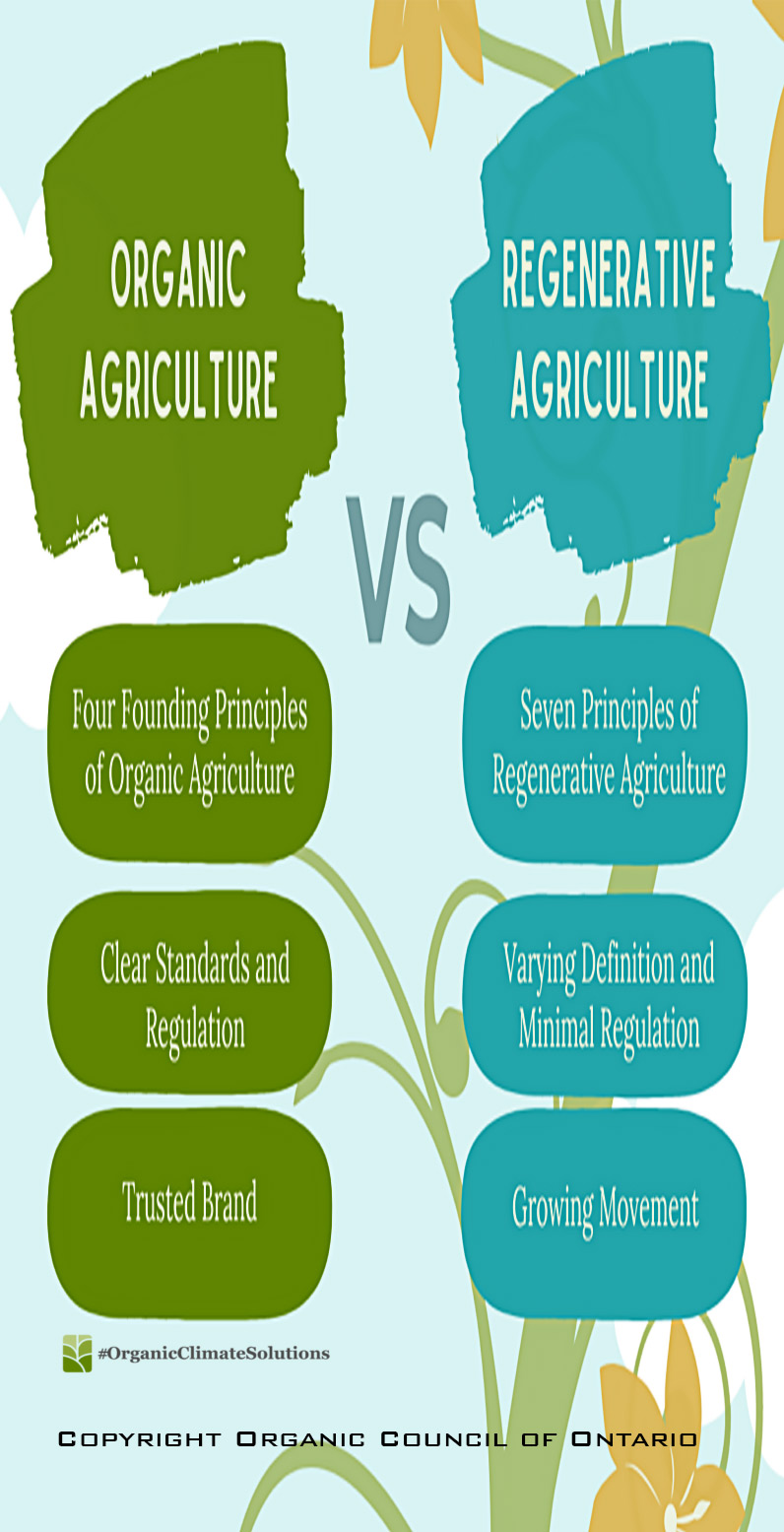
It turns out it’s not just cost that’s the main issue preventing consumers from going organic, or to any other Alt-AG process like regenerative or permaculture et al. It’s also CONFUSION. Who knew?
SHOPPING CART CHAOS
CREDIT: Engin Akyurt
WHERE ARE ALL THE CUSTOMERS?
Retail analysts report organic prices are often artificially inflated by grocers as a marketing ploy for PRICING CONTRAST… WAIT! WHAT?
(BTW, Alt-AG food like regenerative and permaculture are even more expensive, often twice as much, but for different reasons tied to scarcity.)
It’s not easy to see, but most common grocers and farmers don’t want consumers getting too excited about organic because it will have a negative impact on CHEAP FOOD, the unhealthy stuff and biggest seller and profit centre.
Grocers use EXPENSIVE ORGANIC as a HOOK to get consumers into their stores where they do a REVERSE BAIT & SWITCH herding them to bad food, the only stuff most consumers can afford. Position a $10 pint of organic strawberries beside a $3 ChemFarm pint and the CHEAP berries with the highest concentration of pesticides fly off the shelf. Organic farmers who are trying to survive are covertly conscripted and funneled into going along with the consumer charade.
In fairness to all farmers, and I’m asking rhetorically, why would anyone invite more competition when organic already OWNS the HIGH QUALITY HEALTHY FOOD market?
It would be self-sabotage.
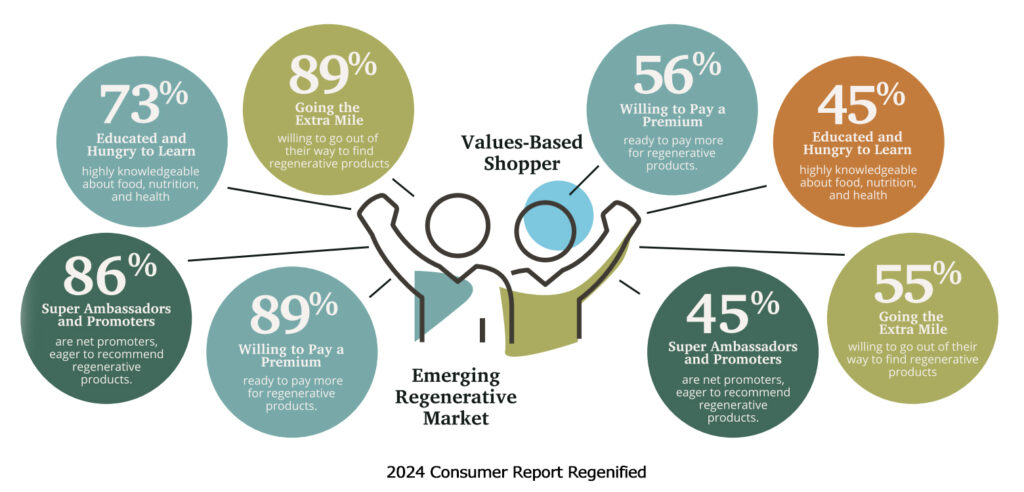
As you can see in the graph, consumers are eager to find high quality food, and will pay premium prices.
NO Customers = NO Revenue
Most organic farmers feel trapped, and don’t know how to get off the circular treadmill.
It’s not easy to jump off and on to another path without missing a beat and impacting revenue.
We recognized today’s challenge as far back as 2012 and over the years developed a solution that is easy, fast, and affordable for organic farmers to adopt. It also works for other alternative ag farmers, who for example, practice regenerative and permaculture. Plus, it’s good for syntropic, biodynamic, and all the other processes too.
Alt-AG, alternative agriculture like organic and all the rest can be affordable if grocers and farmers shift focus from trying to generate the highest profit possible, and instead invest a little to educate consumers.
Who Dropped the Customer Ball?
Farmers usually do not have the ability to think too far ahead. It’s not because they aren’t smart. It’s because most are overwhelmed. Plus, they’ve been conditioned by large corporations and governments to accept what they have, and to not make waves.
All farmers, factory or organic are conditioned to be complacent and to obey. Most do. The rest are here mostly for the money hoping someone else will do the heavy lifting.
This is why it’s critically important to know your neighborhood grocer and LOCAL farmer.
My Farmer Is My Friend is designed to encourage professional relationships between grower and shopper.
No consumers, equals no revenue.
Education is Critical
Every grocer and farmer at the very least today should share information at each point of sale about the difference between healthy food and bad food. It can be something as simple as a link to a statement explaining why alternative agriculture like organic, regenerative, or permaculture are the best choices compared to chemical food, the bad stuff. Even better would be a small card with information and a link. I can hear some of you virtue signaling already… OH, paper!!? What about the trees… you disingenuously ask? Well, what about the fact that you and any family have increased odds of getting a serious illness from eating bad food and dying? What about heart disease, or cancer? What about the medical cost to society for your gluttony and sloth? Don’t pretend to worry about the trees. They’ll still be here when you’re gone. Save yourself before you try to save the earth… is a common sense horse-before-the-cart thing.
Who Holds the Reins Today?
ARE ORGANIC FARMERS CONFUSED?
Well, kind of, because most of them are happy with their government subsidies and the status quo, and don’t want anything to change. If it hurts their bottom line, they don’t want to see organics elevate itself to a sustainable process that also heals the earth and generates higher nutrient density and healthier food. They invested years cornering their share of the market and are not going to give it up just for better climate. In fact, they are so freaked out by Alt-AG options like regenerative and permaculture that most organic farmers ignore it completely hoping it will go away. Even organic organizations that came to the table late are now playing catch up. The truth is, smart farmers who embraced Alt-AG properly are already generating massive revenue while protectionist organic farmers scratch their heads and other body parts wondering how they missed the parade.
The message today is;
HEALTH COMES AT A PRICE,
and it’s steep.
You want healthy food,
it’ll cost you.
sorry
*
Considering that organic is still somewhat of an EMERGING industry, when you see a grocer or farmer not incorporating a substantial educational program into their sales process you can be pretty certain they have little interest in growing the movement and market.
On the other hand, when you see a grocer or farmer who actually makes an effort to share what they know about healthy organic food that is also good for the earth and climate, these are the folks to pay attention too. This progressive FOOD IS MEDICINE group altruistically invests in consumers and the community, not just themselves.
Everyone else is just here for the money grab and to use consumers in any way possible to reach their sales targets. It doesn’t matter if it’s a big box grocer, a little independent specialty shop, a farmer who sells at a large grocer or at a farmers market; If they don’t have an active and visible educational program they are disingenuous. Unfortunately, there are way more bad actors and overworked farmers than there are effective enterprises.
Organics in America holds less than 4% of food sales.
Bad farmers and grocers control the rest.
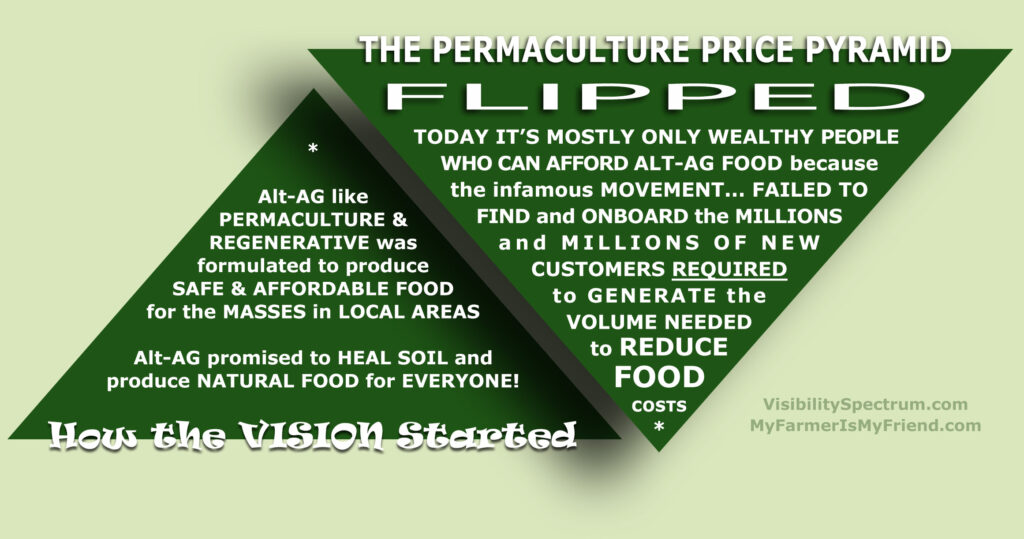
All this… is why we developed My Farmer Is My Friend.
One of the cool things about My Farmer Is My Friend is that we give the core promotional concept freely to the world. It’s an effective and proven OPEN SOURCE process that anyone can use, but just like an apple, it won’t pick or eat itself. You have to do the work.
MFIMF is an easy process to learn and leverage, but first you have to understand all the players in the LOCAL SHORT FOOD SUPPLY CHAIN, and how they interact with each other. Thankfully, it’s easy to get up to speed. Once you see and understand the core principles and basic knowledge we developed over several years of research and experimenting, you can adapt it for your region and situation. Remember, the HIGHEST QUALITY ORGANIC also incorporates alternative processes like regenerative or permaculture to deliver FULL SPECTRUM HEALTHY FOOD.
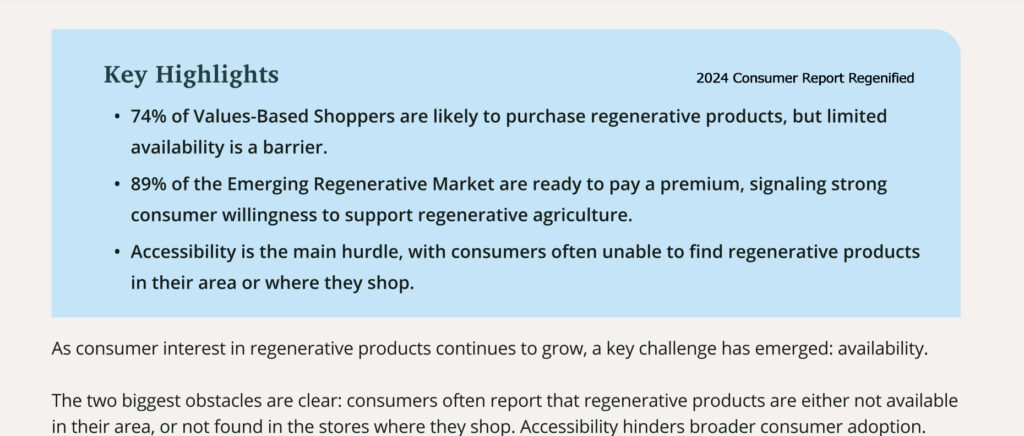
Want customers? It’s up to you…
Reach out and let’s explore realistic options together.
VISION at VisibilitySpectrum.com
If you’re ready for a change and to help educate consumers;
Book an online introduction to the concept.
VISION at VisibilitySpectrum.com
(a $50 fee to deter looky loos.)
Once you know, you know.
STILL NOT CONVINCED?
DEEP DIVE into the
CUSTOMER CRISIS
but this is your last warning. haha
If you don’t get it after the next screen,
HEALTHY FOOD might not be for you 😉
The HEALTHY FOOD Movement
Secret Shopper Opportunity
LEARN MORE through our
Development Site at
VisibilitySpectrum.com